
Invisalign® is a branded clear-aligner system used to move teeth through a series of custom-made, removable aligners. Clear aligner treatment can be an effective orthodontic option for many patients, but it is not automatically appropriate for every bite or every movement. The treatment plan, case complexity and patient’s ability to wear the aligners consistently all matter.
Medically reviewed by Dr. Walter Kostrzewski, DMD
Dr. Kostrzewski has more than two decades of experience in dentistry and reviews the dental information published by ACE Dental Resource.
Invisalign is a brand name, not a synonym for every clear aligner system. Throughout this article, “Invisalign” refers specifically to the Invisalign System, while “clear aligner treatment” refers to the broader orthodontic category.
What Is Invisalign?
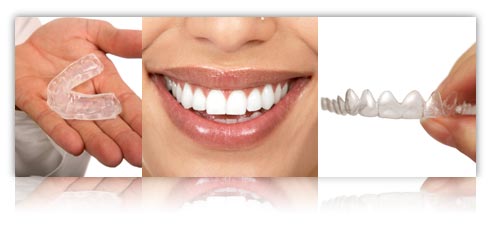
Invisalign treatment uses a sequence of transparent aligners that are designed around a dentist’s or orthodontist’s treatment plan. Each aligner is intended to make a small change in tooth position before the patient progresses to the next stage.
The aligners are removable, which can make eating, brushing and flossing easier than with fixed braces. They also require a high level of patient participation because the appliance only works while it is being worn.
Invisalign’s current patient guidance recommends wearing the aligners for about 20 to 22 hours a day. [1]
How Invisalign Treatment Works
- Examination and diagnosis: The dentist or orthodontist evaluates the teeth, gums, bite and overall orthodontic problem. Records may include photographs, digital scans and radiographs when indicated.
- Treatment planning: A digital treatment plan maps the intended sequence of tooth movements. The clinician decides whether aligners are appropriate and whether attachments, interproximal reduction, elastics or other auxiliaries are needed.
- Aligner fabrication: A series of custom aligners is produced for the planned stages of treatment.
- Active treatment: The patient changes aligners according to the clinician’s instructions and attends periodic appointments to check progress.
- Refinement: If teeth have not moved exactly as planned, additional aligners may be needed. A computer simulation is a treatment plan, not a guarantee of the final result.
- Retention: After active tooth movement, retainers are used to help maintain the result.
Actual treatment schedules vary. The old assumption that every Invisalign case uses a fixed number of two-week aligners or takes approximately one year is outdated; the number and duration of stages depend on the treatment plan.
What Can Invisalign Treat?
Clear aligners can be used for a range of orthodontic problems, including many cases involving crowding, spacing and selected bite problems. Evidence suggests that clear aligners can be effective, particularly for mild-to-moderate malocclusions, but some movements are less predictable than others and fixed appliances may still offer advantages for certain complex movements. [2][3][4]
| Problem | Can clear aligners be considered? | What matters |
|---|---|---|
| Crowding | Often | Severity, available space and planned movements |
| Spacing | Often | Cause of the spacing and stability after treatment |
| Overbite/deep bite | Selected cases | Severity and required tooth movements |
| Crossbite | Selected cases | Whether the problem is dental or skeletal |
| Underbite/Class III | Selected cases | Dental vs skeletal cause and complexity |
| Major skeletal discrepancy | May require other treatment | Aligners cannot replace every form of jaw correction |
A recent systematic review concluded that evidence is strongest for mild-to-moderate malocclusion and remains less certain for more complex cases. [4] The FDA also notes that clear aligners may not effectively treat some complex orthodontic conditions. [5]
Where Invisalign May Have Limitations
The important question is not simply whether Invisalign can move teeth. It is whether it can produce the specific movements and bite correction required in a particular patient.
| Potential limitation | Why it matters |
|---|---|
| Complex tooth movements | Some movements are less predictable with aligners than others. |
| Severe skeletal problems | A removable aligner cannot correct every underlying jaw discrepancy. |
| Compliance | Removing aligners too often or wearing them for too few hours can interfere with treatment. |
| Attachments and auxiliaries | Some cases need tooth-colored attachments, elastics or other components. |
| Refinements | Additional aligners may be needed if teeth do not follow the original plan closely enough. |
Invisalign vs. Six Month Smiles
These treatments should not be treated as interchangeable. Invisalign is a branded clear-aligner system, while Six Month Smiles® is a branded guided orthodontic system designed around shorter, limited treatment goals in selected cases.
| Feature | Invisalign® | Six Month Smiles® |
|---|---|---|
| Type | Clear removable aligner system | Branded short-term/guided orthodontic system with clear braces and aligners |
| Main emphasis | Moving teeth according to an individualized orthodontic plan | Shorter treatment for selected cases, particularly where limited correction is appropriate |
| Treatment time | Varies substantially by case | The company states an average around six months, with many cases taking 6–10 months |
| Complex bite correction | Depends on the specific case and movements required | Not intended to reproduce every goal of comprehensive orthodontics |
| Removable? | Yes | Depends on whether the braces or aligner system is selected |
Six Month Smiles itself states that its shorter treatment goals are not exactly the same as conventional comprehensive orthodontics and that major changes such as significant Class correction or major midline changes are generally outside its guided treatment goals. [6]
For more detail, see our Six Month Smiles® guide.
What Are Invisalign Attachments?
Some Invisalign cases use small tooth-colored attachments bonded temporarily to selected teeth. These attachments give the aligner additional surfaces from which to apply forces for particular movements.
Attachments do not mean treatment has failed or that Invisalign is no longer “invisible.” They are a normal part of many treatment plans, although their appearance varies.
How Long Does Invisalign Take?
There is no single treatment time for Invisalign.
A simple alignment problem may require substantially less time than a complex bite correction. Treatment can also take longer when teeth do not track as planned, when refinements are necessary, or when aligners are not worn as directed.
The best estimate comes from an examination and individualized treatment plan rather than from the average duration advertised for the product.
Does Invisalign Hurt?
Patients may notice pressure, tightness or tenderness when starting a new aligner or moving to a new stage. Discomfort is usually temporary.
Clear aligners can also irritate the cheeks, lips or gums if an edge is rough or the fit is problematic. Persistent pain or a damaged appliance should be discussed with the treating clinician.
Eating, Cleaning and Daily Life
Because Invisalign aligners are removable, patients generally remove them for meals and put them back after cleaning their teeth and the aligners as directed. Good oral hygiene remains important because trapped plaque can contribute to tooth decay and gum problems.
Consistent wear is one of the major differences between removable aligners and fixed braces. The convenience of being able to remove an aligner also creates a compliance requirement.
What Happens After Invisalign?
Orthodontic treatment does not end when the active tooth movement is complete. Teeth can shift after treatment, so a retention plan is necessary.
Reviews of orthodontic retention consistently describe relapse as a multifactorial problem and emphasize the importance of retention after active treatment. [7][8] The exact retainer type and wearing schedule should be individualized.
How Much Does Invisalign Cost?
There is no single reliable price for Invisalign. The total cost depends on treatment complexity, duration, provider fees, geographic location, whether refinements are required, and what is included in the treatment package.
| Cost factor | Why it affects the total |
|---|---|
| Case complexity | More extensive tooth movement generally requires more treatment. |
| Treatment duration | Longer treatment can involve more stages and appointments. |
| Refinements | Additional aligners may add clinical and laboratory costs depending on the provider’s plan. |
| Retainers | Post-treatment retainers may be included or billed separately. |
| Insurance/financing | Orthodontic benefits vary by plan and patient eligibility. |
Ask for a written estimate that explains what is included rather than comparing only the advertised starting price.
How to Choose an Invisalign Provider
The product is only one part of orthodontic treatment. Diagnosis, case selection, treatment planning and monitoring are important.
- Ask who will diagnose and supervise your treatment.
- Ask which parts of your bite the proposed plan is intended to correct.
- Ask whether attachments, elastics, enamel reduction or other auxiliaries are expected.
- Ask how refinements are handled if teeth do not track as planned.
- Ask what the retention plan will be after treatment.
- Ask whether the quoted fee includes scans, refinements and retainers.
Questions to Ask Before Starting Invisalign
| Question | Why it matters |
|---|---|
| What exactly are we trying to correct? | Clarifies whether the goal is alignment, bite correction or both. |
| Are clear aligners appropriate for my case? | Not every orthodontic movement is equally predictable with aligners. |
| Will I need attachments or elastics? | These can be important for specific movements. |
| How likely are refinements? | Additional aligners are sometimes necessary. |
| How long will active treatment and retention last? | Sets realistic expectations beyond the first series of aligners. |
| What happens if I do not wear the aligners as directed? | Compliance directly affects treatment progress. |
Bottom Line
Invisalign can be an effective and convenient orthodontic option for many patients, particularly when the planned tooth movements are suitable for clear aligners and the patient can wear them consistently. Evidence also shows that clear aligners are not equally predictable for every orthodontic movement, so treatment should be based on diagnosis rather than the appeal of the appliance alone. [2][3][4]
If you are deciding between Invisalign and a short-term system such as Six Month Smiles®, compare the treatment goal, not just the appliance or advertised duration.
Research and Sources
- Invisalign. “Invisalign Aligners FAQs.” Invisalign.
- AlMogbel A, Alshawy ES, Alhusainy A. “Efficacy of clear aligner therapy over conventional fixed appliances in controlling orthodontic movement: A systematic review.” Journal of Orthodontic Science. 2024. PubMed 38784075.
- Monisha J, Peter E. “Efficacy of clear aligner wear protocols in orthodontic tooth movement—a systematic review.” European Journal of Orthodontics. 2024. PubMed 38666743.
- “Clear Aligner Treatment: Indications, Advantages, and Adverse Effects—A Systematic Review.” 2025. PMC11764167.
- U.S. Food and Drug Administration. “Clear Dental Aligners.” FDA.
- Six Month Smiles. “Clinical FAQ.” Six Month Smiles.
- Regalado-Bazán CF, Espichan-Salazar AC, Arriola-Guillén LE. “Comparison of relapse of orthodontic treatment following aligner versus conventional fixed appliance treatment.” 2024. PubMed 38988751.
- Littlewood SJ, et al. “Retention procedures for stabilising tooth position after treatment with orthodontic braces.” Cochrane Database of Systematic Reviews. PubMed 37219527.
Related ACE Dental Guides
- Six Month Smiles®: What It Treats, Limitations & Alternatives
- Choosing a Cosmetic Dentist: What to Look For
- Dental Treatment Prices
Editorial note: Orthodontic treatment should be planned after an individualized examination. Treatment duration and suitability vary by patient, diagnosis, appliance and treatment goals.