
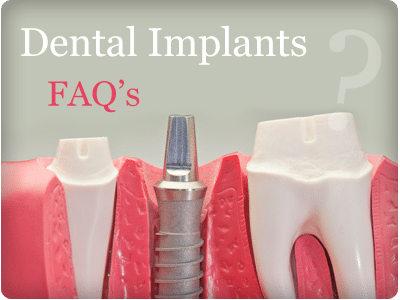
Considering dental implants? This quick-reference FAQ answers common questions about candidacy, treatment stages, healing, cost factors, complications, maintenance and alternatives. For a fuller explanation of implant treatment and long-term considerations, see our complete dental implants guide.
Medically reviewed by Dr. Walter Kostrzewski, DMD
Dr. Kostrzewski has more than two decades of experience in dentistry and reviews the dental information published by ACE Dental Resource.
Dental Implants FAQs
1. Am I a good candidate for dental implants?
Answer: Many adults with one or more missing teeth can be considered for dental implants, but candidacy is not determined by tooth loss alone. Your dentist or implant team will assess your general health, oral health, available bone, gum condition, medications, smoking status and the condition of the teeth around the proposed implant site. A clinical examination and dental imaging are normally part of treatment planning. [1][2]
Healthy gums and adequate bone support are important. A history of periodontitis does not automatically rule out implants, but evidence shows that people with a history of periodontitis can have higher risks of implant loss, peri-implantitis and marginal bone loss. Active periodontal disease should therefore be addressed as part of the treatment plan. [5]
2. Is there an age limit for dental implants?
Answer: Age by itself is not usually the deciding factor. Overall health, oral conditions, bone availability and the ability to maintain the implant are more relevant. Younger patients whose jaw growth is incomplete may need to wait until growth is complete. Older adults may still be candidates when their health and oral conditions allow treatment. [1]
3. What happens before the implant is placed?
Answer: The planning stage may include a dental examination, X-rays or other imaging, impressions or digital scans, and an assessment of the gums and bone. Your dentist also reviews your medical history and medications. If there is not enough bone to support an implant, a bone-grafting procedure may be discussed. [2][3]
Good planning also means identifying problems that could affect the outcome, such as untreated gum disease, smoking, poor plaque control or uncontrolled medical conditions. Current consensus recommendations emphasize identifying and addressing modifiable risk factors before and during implant treatment. [4]
4. What are the main stages of dental implant treatment?
Answer: Treatment varies by patient, but it commonly involves:
- Assessment and planning: examination and imaging are used to determine the implant position and restoration design.
- Bone preparation, if needed: some patients need bone grafting or another procedure before implant placement.
- Implant placement: the implant is surgically placed in the jawbone, usually with local anesthesia.
- Healing and osseointegration: bone grows around the implant and provides its long-term support.
- Abutment and restoration: after appropriate healing, a crown, bridge or denture is connected to the implant.
Some treatment plans combine stages or use immediate provisional teeth, while others require several months of healing. There is no single timeline that applies to every patient. [1][2][3]
5. How long does dental implant treatment take?
Answer: The total timeline can range from several months to longer than a year when additional procedures are needed. One NHS hospital guide notes that treatment can take around 6 to 12 months overall, while bone grafting may add several months in some cases. [2][3]
The important distinction is between recovery from surgery and completion of implant treatment. You may return to many normal activities relatively quickly after surgery, but the implant still needs time to heal and integrate with the surrounding bone before the final restoration is completed.
6. Does getting a dental implant hurt?
Answer: Implant placement is normally performed with local anesthesia, so the surgical procedure itself should be numb rather than painful. Afterward, some soreness, swelling, bruising or minor bleeding can occur. NHS patient guidance says discomfort is commonly managed with regular pain medication and may last for about a week, although recovery differs between patients and procedures. [3]
Bone grafting or more extensive surgery can involve a different recovery experience. Your dentist should explain the expected postoperative symptoms and when to contact the practice.
7. What does a dental implant cost?
Answer: There is no reliable single price for a dental implant because the treatment may include several separate components. A written estimate should clarify what is included rather than presenting an implant as one simple item.
| Cost factor | Why it matters |
|---|---|
| Number of implants | Replacing one tooth is different from replacing several teeth or supporting a full-arch restoration. |
| Implant components | The implant, abutment and final crown or prosthesis may be priced separately. |
| Imaging and planning | Examination and diagnostic imaging are part of treatment planning. |
| Bone grafting | Additional bone-building procedures may be required when available bone is insufficient. |
| Sedation or anesthesia | Additional fees may apply depending on the treatment and anesthesia plan. |
| Temporary and final teeth | Provisional restorations and the final crown, bridge or denture can affect the total cost. |
| Follow-up and maintenance | Long-term professional care is part of maintaining peri-implant health. |
When comparing quotes, ask whether the estimate includes the implant, abutment, restoration, imaging, grafting if required, temporary teeth, and follow-up care. This makes different treatment plans easier to compare.
8. How successful are dental implants?
Answer: Dental implants can have high long-term survival, but “success” and “survival” are not identical measurements, and results vary by patient, implant, restoration and follow-up period. A 2019 systematic review of contemporary implant systems reported a pooled 10-year implant survival estimate of 96.4% in its traditional analysis, while a sensitivity analysis produced a lower estimate of 93.2%. [6]
A 2024 meta-analysis examining 20-year outcomes found that long-term survival remained substantial but declined with longer follow-up and varied according to study design and analysis. The authors emphasized that implant failure is multifactorial and that long-term follow-up remains important. [7]
These figures should not be interpreted as a guarantee for an individual patient. Implant location, smoking, periodontal history, bone conditions, oral hygiene, prosthetic factors and maintenance can all influence outcomes.
9. What can cause a dental implant to fail?
Answer: Implant failure can have several causes. Early failure may involve problems with healing or failure of the implant to integrate with bone. Later complications can involve infection and inflammation around the implant, excessive forces, bone loss or problems with the restoration.
Current evidence identifies a history of periodontitis, smoking and diabetes among important risk indicators for peri-implant disease. Poor plaque control, obesity and unfavorable implant or prosthetic factors can also contribute. [4][5]
Failure is not always caused by something the patient did wrong. Treatment planning, implant position, prosthetic design and biological factors can also matter.
10. What is peri-implantitis?
Answer: Peri-implantitis is an inflammatory disease affecting the tissues around a dental implant and is associated with progressive supporting bone loss. It is different from ordinary short-term soreness after implant surgery.
A 2025 AO/AAP systematic review and meta-analysis that included 102 studies reported substantial rates of peri-implant mucositis and peri-implantitis over long follow-up periods, while identifying periodontitis, smoking and diabetes among important risk indicators. The authors described these as risk indicators rather than proof that any one factor causes disease in every patient. [9]
Warning signs can include bleeding or swelling around an implant, persistent inflammation, pus, bad taste or worsening discomfort. Your dentist should evaluate these symptoms rather than relying on home care alone.
11. Can I get implants if I have gum disease?
Answer: A history of gum disease does not automatically exclude implant treatment, but active or poorly controlled periodontal disease needs attention. Evidence from prospective cohort studies indicates that a history of periodontitis is associated with higher risks of implant failure, peri-implantitis and marginal bone loss. [5]
The practical question is therefore not simply “Have I ever had gum disease?” but whether periodontal disease is currently controlled and whether an appropriate maintenance plan is in place before and after implant treatment.
12. Does smoking affect dental implants?
Answer: Yes. Smoking is associated with a higher risk of complications around dental implants and can interfere with healing. Current consensus guidance identifies smoking as an important risk factor for peri-implant disease, and NHS guidance recommends stopping smoking to reduce complications. [2][4]
If you smoke, tell the dental team before treatment. They can discuss how smoking affects your individual treatment plan and what support is available for stopping.
13. Can I get implants if I don’t have enough bone?
Answer: Sometimes. If the jaw does not have enough bone in the planned implant area, your dentist may discuss bone grafting or another augmentation procedure. Not every patient needs a graft, and the approach depends on the location, amount of available bone and planned restoration. [2][3]
Bone grafting can extend the overall treatment timeline. It should be considered part of the implant plan rather than an unexpected add-on after treatment has already started.
14. How should I care for dental implants?
Answer: Dental implants still require daily oral hygiene and professional follow-up. The implant itself cannot develop tooth decay, but the tissues around it can become inflamed and infected.
- Brush regularly with fluoride toothpaste.
- Clean between teeth and around implant-supported restorations as recommended by your dental team.
- Attend periodontal or implant maintenance visits appropriate to your risk level.
- Do not ignore bleeding, swelling or other persistent changes around an implant.
- Avoid tobacco and address other modifiable risk factors.
A 2025 systematic review found evidence across several self-care approaches, including toothbrushing, interdental cleaning, toothpaste, mouth rinses and multimodal routines, while noting differences in the available evidence. [8] Your dental team can tailor the routine to your implant design and gum health.
15. How long do dental implants last?
Answer: Dental implants are designed as long-term tooth replacements, but no implant should be described as guaranteed to last for life. Long-term studies show that many implants remain in function for 10 years or more, while survival varies with patient factors, implant characteristics, restoration and follow-up. [6][7]
The implant and the crown are also different components. Even when the implant remains stable, the crown or other restoration may eventually need repair or replacement because of wear, fracture, changes in the surrounding teeth or other prosthetic problems.
16. Are dental implants better than dentures or bridges?
Answer: They solve the problem differently, so there is no universal choice that is best for every patient.
| Option | How it works | Important consideration |
|---|---|---|
| Dental implant | A surgically placed implant supports a crown, bridge or denture. | Requires surgery and sufficient conditions for implant treatment. |
| Fixed bridge | Replacement teeth are supported by adjacent teeth or other structures. | May require preparation of supporting teeth. |
| Removable denture | A removable appliance replaces several or all missing teeth. | Does not provide the same type of root-level support as an implant. |
| Implant-supported denture | Implants help retain and support a removable or fixed prosthesis. | Requires implant surgery but can reduce reliance on denture adhesives or suction. |
The right option depends on the number and position of missing teeth, bone and gum health, medical factors, treatment goals, cost and your preference. Our dental implants guide explains these options in more detail.
17. What are mini dental implants?
Answer: Mini dental implants are smaller-diameter implants used in selected situations. They are not simply a cheaper version of a conventional implant for every indication. Their use depends on the anatomy, restoration and treatment goal.
They are particularly relevant in some implant-retained denture approaches, but conventional implants remain an important option for many tooth-replacement situations. See our mini dental implants guide for a dedicated discussion of their uses, limitations and alternatives.
18. What questions should I ask before choosing implant treatment?
Before committing to treatment, consider asking:
- What is causing the tooth loss, and does that need treatment first?
- Do I have active gum disease or other oral problems that should be addressed?
- Do I have enough bone, and will I need a graft?
- What type of implant restoration is being proposed?
- How many appointments and how much healing time should I expect?
- What exactly is included in the quoted cost?
- What are the main risks in my particular case?
- What maintenance will I need after treatment?
- What alternatives are reasonable for me?
- Who will place the implant and who will provide the final restoration?
Bottom line
Dental implants can provide a long-term way to replace missing teeth, but candidacy and expected outcomes depend on individual oral and medical factors. The most useful consultation is one that explains the complete treatment plan, alternatives, risks, costs and maintenance requirements rather than focusing only on the implant placement itself. [1][2][4]
Related ACE Dental Resource Guides
- Dental Implants: Procedure, Cost, Benefits, Risks & Alternatives
- Mini Dental Implants: Uses, Benefits, Risks & Alternatives
- Dentures: Types, Procedure, Cost, Benefits & Alternatives
- Dental Crowns: Procedure, Cost, Benefits, Materials & How Long They Last
- Find a Local Dentist
Sources
- American Dental Association, MouthHealthy — Implants
- Guy’s and St Thomas’ NHS Foundation Trust — Dental Implants
- Guy’s and St Thomas’ NHS Foundation Trust — Having a Dental Implant
- AO/AAP consensus — Prevention and management of peri-implant diseases and conditions, 2025
- Systematic review and meta-analysis — History of periodontitis as a risk factor for implant failure and peri-implantitis, 2024
- Howe et al. — Long-term (10-year) dental implant survival, 2019
- Kupka et al. — 20-year meta-analysis of dental implant survival, 2024
- Eagle et al. — Best oral self-care practices for peri-implant conditions and diseases, 2025
- AO/AAP systematic review and meta-analysis — Prevalence, incidence, and risk indicators for peri-implant diseases, 2025; 102 studies included