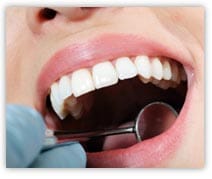
 Lumineers is a brand name associated with very thin ceramic veneers. They are marketed around minimal-preparation or no-preparation treatment, but a thin veneer is not automatically appropriate for every tooth.
Dr. Kostrzewski has more than two decades of experience in dentistry and reviews the dental information published by ACE Dental Resource.
The important clinical question is whether the proposed veneer can achieve the desired color, shape, position and function while preserving healthy tooth structure and maintaining healthy gums.
What are Lumineers?
Lumineers is a proprietary brand associated with thin ceramic veneers. The term should not be treated as a generic name for all no-preparation veneers. Other manufacturers and laboratories also offer thin or minimally invasive ceramic approaches.
Are Lumineers really no-prep?
Some cases may require little or no tooth reduction, but this is a case-selection issue rather than a universal property of every treatment marketed under the brand. If the desired result requires more space, changes in tooth contour or correction of an underlying position problem, preparation or another treatment may be necessary.
A 2026 systematic review comparing no-prep and conventional veneers reported favorable survival for no-prep veneers, but only four studies with 126 patients met its inclusion criteria. The evidence therefore supports careful use rather than a blanket claim that no-prep treatment is best for everyone. [1]
What can Lumineers potentially improve?
| Concern | Potential role |
|---|---|
| Small shape irregularities | Can change visible tooth contours in selected cases. |
| Minor spacing | May close small spaces by changing tooth proportions. |
| Selected discoloration | Can mask some discoloration that is not suitable for whitening. |
| Minor wear or chips | May restore visible contour when sufficient tooth structure remains. |
What can Lumineers not do?
Lumineers do not move teeth through bone. Significant crowding, rotations or bite problems may be better addressed with orthodontics. Active decay or gum disease should also be treated rather than covered with a veneer.
Lumineers vs. conventional veneers
| Lumineers / very thin veneer | Conventional ceramic veneer | |
|---|---|---|
| Thickness/preparation | Designed around minimal or no preparation in selected cases | May require controlled enamel preparation |
| Case selection | Requires sufficient space and suitable tooth position | Can accommodate a wider range of design changes |
| Reversibility | May be more conservative if truly no preparation is performed, but should not be assumed | Usually not reversible once enamel has been removed |
| Brand | Specific commercial brand | Generic treatment category |
Are Lumineers painless?
A no-preparation procedure may involve less discomfort because less tooth structure is altered. However, it is not appropriate to promise that every patient will experience no discomfort or sensitivity. Your actual treatment determines what anesthesia and recovery may be needed.
How long do Lumineers last?
The longevity of a particular brand should not be assumed to be identical to the longevity of every thin ceramic veneer. Ceramic veneer survival depends on material, bonding surface, preparation, bite, hygiene and case selection.
Systematic reviews of ceramic veneers show generally high long-term survival, but complications such as fracture and debonding still occur. [2] Enamel is also an important bonding substrate; a recent meta-analysis found lower failure rates when ceramic veneers were bonded primarily to enamel than when substantial dentin was exposed. [3]
What are alternatives to Lumineers?
- Conventional or minimally invasive veneers
- Composite dental bonding
- Teeth whitening
- Clear aligner treatment
Will insurance cover Lumineers?
Because Lumineers are generally chosen for cosmetic improvement, patients should not assume dental insurance will cover them. Coverage depends on the individual plan and whether any part of the proposed treatment has a restorative indication.
Questions to ask before choosing Lumineers
- Do I actually qualify for a no-preparation or minimal-preparation veneer?
- Will any enamel be removed?
- Could bonding or whitening achieve the same goal?
- Could orthodontics address the underlying alignment issue?
- What happens if the veneer chips or debonds?
- What material is being used and who fabricates it?
- What is included in the total cost?
Research and Sources
- Hameed FFS, et al. Clinical Outcomes of No-prep Veneers and Conventional Veneers: A Systematic Review. 2026. PubMed.
- AlJazairy YH. Survival Rates for Porcelain Laminate Veneers: A Systematic Review. 2021. PubMed.
- Alqutaibi AY, et al. Clinical survival and complication rate of ceramic veneers bonded to different substrates: A systematic review and meta-analysis. 2024/2025. PubMed.
Editorial note: Lumineers treatment is individualized. This article provides general educational information and is not a substitute for an examination or treatment plan from a licensed dentist.