
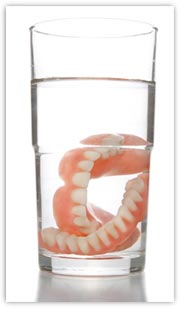
Flexible partial dentures are removable partial dentures made with thermoplastic or other flexible polymers rather than a conventional rigid metal framework. They can be attractive when a patient wants tooth replacement with less visible clasping, but “flexible” does not automatically mean better. Material choice, denture design, support from the remaining teeth and long-term maintenance all matter.
Medically reviewed by Dr. Walter Kostrzewski, DMD
Dr. Kostrzewski has more than two decades of experience in dentistry and reviews the dental information published by ACE Dental Resource.
Flexible partial dentures are a subset of removable partial dentures. They should be planned by a dentist after an examination of the remaining teeth, gums, bite and supporting tissues. They are not appropriate for every pattern of tooth loss.
What Are Flexible Partial Dentures?
A flexible partial denture replaces one or more missing teeth while some natural teeth remain. Its base and clasping components are made from a flexible thermoplastic material. The absence of conventional metal clasps can improve appearance, but the design still has to provide adequate support, retention and stability.
| Feature | Flexible partial | Conventional removable partial |
|---|---|---|
| Base/framework | Usually thermoplastic polymer; designs vary by material. | Commonly acrylic, metal framework, or a combination. |
| Appearance | Can reduce the visibility of clasps. | Metal components may be visible depending on design. |
| Adjustment | Material-specific laboratory procedures may be required. | Many conventional designs can be adjusted or repaired more predictably. |
| Long-term evidence | More limited for some flexible materials and designs. | A larger evidence base exists for conventional removable partial dentures. |
Why Would Someone Choose a Flexible Partial?
The most obvious potential advantage is appearance. Tooth-colored or translucent clasps can be less noticeable than metal. Flexible materials may also be useful when a patient has specific anatomical or esthetic requirements.
However, the decision should not be based on appearance alone. A systematic review of nonmetal clasp dentures found potential advantages such as flexibility and esthetics, but also reported limitations including surface roughening, staining, tissue trauma and a lack of strong long-term clinical evidence. The authors advised caution when these dentures are used as definitive rather than temporary treatment. [1]
Are Flexible Dentures Better Than Metal Partial Dentures?
There is no universal answer. Flexible dentures may look better in some situations, while conventional designs can offer biomechanical advantages that are important for distributing chewing forces and protecting the remaining teeth.
A 2025 systematic review and meta-analysis specifically examined retention of thermoplastic polymer clasps compared with cobalt-chromium clasps. The evidence base remains limited and heterogeneous, so clasp material should be considered as part of the overall denture design rather than treated as an isolated feature. [2]
| Consideration | Why it matters |
|---|---|
| Esthetics | Flexible clasps can be less conspicuous. |
| Retention | The denture must resist displacement during chewing and speaking. |
| Support | Forces need to be transferred appropriately to teeth and tissues. |
| Remaining teeth | Their health, position and periodontal support influence the design. |
| Maintenance | Some flexible materials are more difficult to adjust, reline or repair. |
| Long-term durability | Evidence varies by material and design, and long-term data are less robust than many marketing claims suggest. |
Materials Used for Flexible Dentures
“Flexible denture” is not one single material. Thermoplastic polyamides and other polymers are used in different commercial systems, and their physical properties are not identical. Older literature has noted that thermoplastic materials can have lower color stability, greater surface roughening and different fracture behavior than conventional polymethyl methacrylate materials. [3]
Do not assume that a brand name or the word “nylon” tells you everything important about a product. Ask the dentist which material is being proposed and what its limitations are.
How Are Flexible Partial Dentures Made?
1. Examination and treatment planning
The dentist assesses the remaining teeth, periodontal tissues, bite, edentulous spaces and the amount of support available.
2. Impressions or digital records
Traditional impressions or digital records may be used depending on the practice, laboratory and material.
3. Laboratory fabrication
The laboratory forms the denture base, artificial teeth and retention components according to the prescription.
4. Fitting and adjustment
The dentist checks seating, pressure areas, occlusion and retention. Follow-up is important because discomfort may appear only after the appliance is worn for a period of time.
Do Flexible Dentures Damage the Gums or Remaining Teeth?
They can if the design, fit, hygiene or maintenance is inadequate. Any removable partial denture can create plaque-retentive areas or place forces on supporting teeth. A 2023 systematic review of removable partial denture complications found that retention problems, framework or denture fractures, repairs and relining were among commonly reported technical complications, although the evidence was heterogeneous. [4]
If a flexible partial causes persistent soreness, bleeding, looseness or difficulty cleaning around a natural tooth, have it evaluated rather than continuing to wear it unchanged.
How Long Do Flexible Dentures Last?
There is no reliable single lifespan that applies to every flexible partial. Longevity depends on material, design, chewing forces, hygiene, remaining teeth, fit and whether the appliance can be maintained as the mouth changes.
The evidence base is not strong enough to promise that a flexible partial will last a particular number of years. A dentist should also tell you whether the proposed material can be relined, repaired or modified if the supporting tissues change.
Caring for a Flexible Partial Denture
- Clean the appliance according to the material and manufacturer’s instructions.
- Clean your natural teeth, gums and tongue every day.
- Do not use abrasive products or hot water unless specifically recommended for the material.
- Rinse after meals when practical.
- Attend regular dental examinations so the remaining teeth and supporting tissues can be checked.
- Ask your dentist how the appliance should be stored when it is not being worn.
Flexible Denture Cost
Cost varies by material, laboratory, number of teeth being replaced, complexity, location and the condition of the remaining teeth. Avoid relying on the old fixed price ranges that appeared in this page’s original version. Ask for a written estimate that includes examinations, impressions or scans, laboratory fees, adjustments and any required treatment of the remaining teeth.
Flexible Dentures vs. Other Options
| Option | Potential role | Key trade-off |
|---|---|---|
| Flexible partial denture | Removable tooth replacement with an emphasis on esthetics. | Maintenance and long-term evidence vary by material and design. |
| Conventional removable partial | Removable replacement using established framework designs. | May have visible metal components but can provide strong support and retention when properly designed. |
| Dental bridge | Fixed replacement for selected missing-tooth spaces. | Requires a suitable fixed-restoration design and may involve preparation of supporting teeth. |
| Dental implant | Fixed or removable tooth replacement supported by an implant. | Requires surgery, planning, healing and ongoing maintenance. |
See our dentures guide for the broader range of removable options and our dental implants guide for implant-supported alternatives.
Questions to Ask Your Dentist
| Question | Why it matters |
|---|---|
| Why is a flexible design appropriate for my pattern of tooth loss? | Not every missing-tooth pattern is suited to the same design. |
| What material will be used? | Different polymers have different properties and maintenance requirements. |
| How will the denture be supported and retained? | Retention alone does not guarantee good load distribution. |
| Can it be relined or repaired? | This matters as the mouth changes over time. |
| What are the alternatives? | A conventional partial, bridge or implant may be more suitable in some cases. |
Bottom Line
Flexible partial dentures can provide an attractive removable option for selected patients, particularly when minimizing visible clasping is important. They should not, however, be marketed as universally superior to conventional partial dentures. The best choice depends on the remaining teeth, oral tissues, function, esthetic goals, maintenance needs and the quality of evidence behind the proposed material and design.
Research and Sources
- Mendoza-Carrasco I, et al. Nonmetal clasp dentures: What is the evidence about their use? Journal of Indian Prosthodontic Society. 2020. PubMed.
- Soares LFFB, et al. Do clasps made of thermoplastic polymers ensure adequate retention for removable partial dentures? A systematic review and meta-analysis. Journal of Prosthetic Dentistry. 2025. PubMed.
- Fueki K, et al. Clinical application of removable partial dentures using thermoplastic resin. Part II: Material properties and clinical features of non-metal clasp dentures. Journal of Prosthodontic Research. 2014. PubMed.
- Dawid MT, et al. Technical Complications of Removable Partial Dentures in the Moderately Reduced Dentition: A Systematic Review. Dentistry Journal. 2023. PubMed.
Editorial note: This page provides general dental information and is not a diagnosis or substitute for an examination by a dentist.