
Orthodontics focuses on the alignment of teeth and the relationship of the teeth and jaws. Treatment can address crowding, spacing, irregular bites and selected developing dentofacial problems. The appropriate treatment and timing depend on the individual patient’s examination and needs. [1][2]
This page is the orthodontic hub for ACE Dental Resource. It provides a high-level explanation and directs readers to our dedicated treatment guides rather than repeating their detailed content.
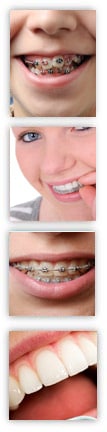
What Does Orthodontic Treatment Address?
Orthodontic evaluation may identify problems involving tooth position, spacing, crowding, bite relationships or jaw development.
| Concern | What orthodontic care may address |
|---|---|
| Crowding | Limited space or tooth-position problems. |
| Spacing | Gaps or excess space between teeth. |
| Overbite or underbite | Some irregular relationships between upper and lower teeth. |
| Crossbite | Certain abnormal relationships between upper and lower teeth. |
When Should Someone Have an Orthodontic Evaluation?
The American Association of Orthodontists recommends that children have an orthodontic check-up by age seven. This does not mean every seven-year-old needs braces. An early examination can help determine whether monitoring, early treatment or later treatment is appropriate. [1]
The AAPD likewise emphasizes clinical examination, diagnostic records, diagnosis, treatment priorities and timing when managing the developing dentition. [2]
Adults can also receive orthodontic treatment. Timing depends on the individual’s dental and skeletal condition, oral health and treatment goals.
Types of Orthodontic Treatment
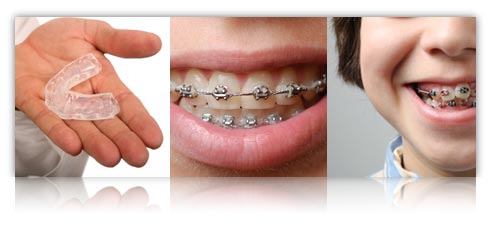
The American Association of Orthodontists describes braces, clear aligners and retainers among the available orthodontic treatment options, with selection based on the individual’s needs. [3]
| Option | General description | ACE resource |
|---|---|---|
| Traditional braces | Fixed brackets and wires used to apply controlled forces to move teeth. | This hub provides the overview. |
| Clear aligners | Removable transparent trays for selected orthodontic movements. | Invisalign |
| Limited or short-term approaches | Approaches designed around specific treatment goals. | Six Month Smiles |
| Ceramic brackets | Less noticeable bracket systems. | Discuss suitability with an orthodontist. |
Braces vs Clear Aligners
| Consideration | Braces | Clear aligners |
|---|---|---|
| Attachment | Fixed. | Removable. |
| Visibility | Depends on the bracket system. | Generally less noticeable. |
| Eating | Requires appliance-specific cleaning and care. | Removed for eating according to treatment instructions. |
| Suitability | Depends on diagnosis and treatment plan. | Also depends on diagnosis and required movements. |
Invisalign and Clear Aligners
Clear aligners are one orthodontic option and are not automatically appropriate for every alignment or bite problem.
See our dedicated Invisalign guide for indications, limitations, treatment considerations and alternatives.
Six Month Smiles and Limited Treatment Goals
Some orthodontic approaches are marketed around shorter treatment periods or limited aesthetic goals. A shorter stated treatment period does not mean the approach is appropriate for every orthodontic problem.
See our dedicated Six Month Smiles guide for its treatment goals, limitations and alternatives.
How Orthodontic Treatment Is Planned
- Clinical examination and assessment of alignment and bite.
- Diagnostic records or imaging when appropriate.
- Identification of treatment priorities.
- Discussion of treatment options and trade-offs.
- Selection and sequencing of treatment.
- Monitoring during active treatment.
- Retention and follow-up after active tooth movement.
Children and Adults
For children, dental and facial growth can affect treatment timing and sequence. Current AAPD guidance emphasizes decisions based on the stage of dentition and the specific problem being managed. [2]
For adults, existing restorations, gum health, bone support and other dental conditions may affect planning.
Orthodontic Treatment Cost
Fees vary according to treatment approach, complexity, duration, location and other factors. A generic online price range should not be treated as a personal quote. Ask what the proposed fee includes, whether retainers are included, and whether additional dental treatment is needed.
Questions to Ask an Orthodontist
- What problem are we trying to correct?
- What treatment options are available?
- Why is this option appropriate for my case?
- How long might active treatment take?
- What happens after active treatment?
- What type of retainer will I need?
- What costs and follow-up visits are included?
Explore Orthodontic Resources
Sources
- American Association of Orthodontists — Why Kids Should See an Orthodontist by Age 7, 2026
- American Academy of Pediatric Dentistry — Management of the Developing Dentition and Occlusion in Pediatric Dentistry, latest revision 2024
- American Association of Orthodontists — Orthodontic Treatment Options