
Patient: Lucia Bruner
ACE dentist providing treatment: Dr. Carlos Wiesse
Sponsoring laboratory: Dental Masters
Historical treatment plan: Partial denture, bridge, anterior restorations, recontouring and TMD care
Dr. Kostrzewski has more than two decades of experience in dentistry and reviews the dental information published by ACE Dental Resource.
About This Historical Case
This page documents a historical A Soldier’s Smile case involving Lucia Bruner and Dr. Carlos Wiesse. The original article was published years ago and described treatment that was being planned or carried out at the time. Because the original page is historical, details about treatment progress and personal circumstances should not be interpreted as a current clinical record or a current statement about the patient’s health.
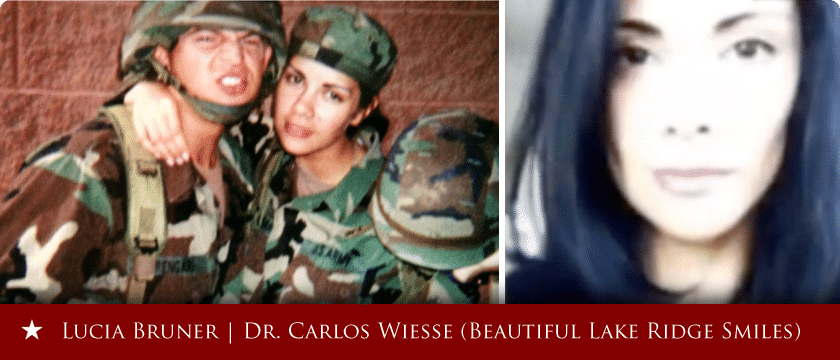
The original story described a young Army veteran who wanted to improve the appearance and function of her teeth. The case involved treatment planning across state lines and included restorative and removable-prosthetic care.
Dental Problems Described in the Original Case
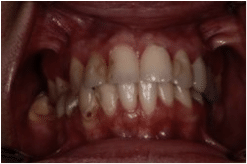
The original article attributed many of Lucia’s dental problems to difficulties that began during her teenage years. It described extensive dental concerns affecting the front teeth and other areas of the mouth. The treatment plan was developed after a comprehensive examination and dental imaging.
The historical account also mentioned treatment for temporomandibular disorder (TMD). TMD is a broad term covering problems involving the jaw joints and the muscles used for chewing. The appropriate diagnosis and treatment depend on the individual’s symptoms and clinical findings.
Treatment Described in the Original Article
The original report described several procedures, including whitening of the anterior teeth, extraction of a tooth that could not be retained, placement of a temporary bridge, impressions for a lower partial denture, anterior fillings and planned recontouring.
A partial denture can replace several missing teeth while using the remaining teeth and oral tissues for support. Depending on the pattern of tooth loss, other options may include fixed bridges or dental implants. The American College of Prosthodontists notes that implants can also be used to improve the stability and retention of some removable partial dentures.
| Historical treatment | Purpose |
|---|---|
| Anterior whitening | Improve tooth color before or alongside restorative treatment. |
| Tooth extraction | Remove a tooth that the treating dentist determined could not be predictably retained. |
| Temporary bridge | Provide an interim replacement while definitive treatment was being completed. |
| Lower partial denture | Replace missing teeth with a removable prosthesis. |
| Anterior restorations | Restore teeth affected by decay, damage or other structural problems. |
| Recontouring | Make carefully planned changes to tooth shape where clinically appropriate. |
Why Comprehensive Planning Matters
Complex restorative cases require more than selecting individual procedures. A dentist needs to consider the condition of the remaining teeth, gums, bite, jaw joints, appearance, cleaning ability and the long-term prognosis of proposed restorations.
For a patient receiving a partial denture, the dentist also needs to assess the teeth that will support the appliance. The design, fit and maintenance of the denture can affect comfort, stability and function. The American College of Prosthodontists recommends evaluation by a dentist, and a prosthodontist can provide additional expertise for complex tooth replacement.
Partial Dentures and Other Tooth-Replacement Options
There is no single replacement option that is appropriate for every patient. Depending on the number and location of missing teeth, remaining tooth health, bone, bite, preferences and budget, a dentist may discuss a removable partial denture, fixed bridge or implant-supported restoration.
Implants are placed in the jawbone and can support crowns, bridges or dentures. They may improve stability in selected patients, but they require surgical treatment and careful evaluation of the patient’s oral and general health.
| Option | General characteristics |
|---|---|
| Removable partial denture | Removable replacement for several missing teeth; can often be repaired or adjusted more readily than fixed restorations. |
| Fixed bridge | A non-removable restoration supported by teeth or, in some cases, implants. |
| Implant-supported restoration | Uses implants placed in the jawbone to support replacement teeth; treatment involves surgery and additional planning. |
What Patients Should Ask Before Treatment
- Which teeth can be predictably restored and which, if any, need extraction?
- What are the short-term and long-term treatment goals?
- Why is a partial denture, bridge or implant-supported option being recommended?
- How will the proposed treatment affect appearance, chewing, speech and cleaning?
- What maintenance and follow-up will be required?
- If jaw-joint symptoms are present, what is the diagnosis and what evidence supports the proposed TMD treatment?
About the Original Story
The original article was published as part of ACE Dental Resource’s coverage of A Soldier’s Smile. We have preserved the historical case and its original images while updating the dental information so readers can better understand the procedures described. The historical treatment details should not be taken as a recommendation for any particular patient.
Learn more about dentures, dental implants, dental treatment costs and finding a local dentist.
Sources
- American College of Prosthodontists — Dentures
- American College of Prosthodontists — Dentures FAQs
- American College of Prosthodontists — Dental Implants